
Newzque Logo

Business News

Latest stories and updates from the world of business

Firstsource Solutions Dividend: RP-Sanjiv Goenka group stock declares highest-ever payout; Record date February 20
Feb 4, 2026etnownews

Firstsource Solutions Dividend: RP-Sanjiv Goenka group stock declares highest-ever payout; Record date February 20

Dividend Stock: Firstsource Solutions' dividend is in focus after the BPM company announced its highest-ever interim dividend of Rs 5.50 per share for FY26 alongside its Q3 results. The 55 per cent dividend payout, record date, earnings performance and share price reaction have caught investor attention.Firstsource Solutions, a Business Process Management (BPM) company and an integral constituent of the BSE 500 index, has a market capitalisation of Rs 21,596.26 crore. The company is part of the RP-Sanjiv Goenka Group.Firstsource Solutions Interim DividendIn an exchange filing dated February 3, Firstsource Solutions announced an interim dividend of Rs 5.50 per share. This translates to a dividend payout of 55 per cent on the stock’s face value of Rs 10, marking the highest interim dividend declared by the company to date.“An interim dividend for the financial year ended March 31, 2026, at Rs 5.50 per share (55 per cent) on the paid-up equity capital of the company,” Firstsource Solutions said in its filing.This means an investor holding 100 shares of Firstsource Solutions will be eligible to receive Rs 550 as dividend income.Firstsource Solutions Dividend Record DateThe company also announced February 20, 2026, as the record date for determining shareholders eligible to receive the interim dividend.“The record date for the purpose of determining the members eligible to receive the said interim dividend has been fixed as Friday, February 20, 2026,” the filing added.Firstsource Solutions Q3 ResultsFor the third quarter, Firstsource Solutions reported a net profit of Rs 120 crore, down 33 per cent from Rs 179.5 crore in the previous quarter. Revenue, however, rose 6.6 per cent quarter-on-quarter to Rs 2,467 crore from Rs 2,314.6 crore.EBIT increased 17.3 per cent to Rs 315.6 crore from Rs 269.1 crore, while the EBIT margin expanded to 12.8 per cent compared with 11.6 per cent in the preceding quarter.Firstsource Solutions Dividend HistoryFirstsource Solutions has maintained a consistent interim dividend track record over the past four years. The company had declared an interim dividend of Rs 4.00 per share in February 2025, following payouts of Rs 3.50 per share each in February 2024, February 2023 and February 2022.Firstsource Solutions Share PriceOn Tuesday, shares of Firstsource Solutions settled 1.6 per cent higher, gaining Rs 4.90 to close at Rs 309.85 on the BSE.(Disclaimer: The above article is meant for informational purposes only, and should not be considered as any investment advice. ET NOW DIGITAL suggests its readers/audience to consult their financial advisors before making any money-related decisions.)

Read full story

Latest Business Updates

Bajaj Finance Q3 Results FY26: Profit declines 6% YoY to Rs 3977 crore; NII rises 21%
Feb 4, 2026

Bajaj Finance Q3 Results FY26: Profit declines 6% YoY to Rs 3977 crore; NII rises 21%

Bajaj Finance Q3 Results FY26: Bajaj Finance Ltd reported a six per cent decline in its year-on-year profit. In Q3, the Bajaj Group company reported Rs 3,977.85 crore profit. In the same period of the previous quarter, it reported a profit of Rs 4,246.54 crore (Q3 FY25). Net interest income increased by 21 per cent in Q3 FY26 to Rs 11,317 crore from Rs 9382 crore in Q3 FY25.Gross NPA and Net NPA as of December 31, 2025 stood at 1.21 per cent and 0.47 per cent respectively , as against 1.12 per cent and 0.48 per cent as of December 31, 2024. The provisioning coverage ratio on stage 3 assets was 61 per cent. #Q3WithETNOW | Bajaj Finance Q3: NPA and impact of New Labour Code 👇 #StockMarket #EarningsWithETNOW https://t.co/dztEQFQUrV pic.twitter.com/nYbguD0iz4— ET NOW (@ETNOWlive) February 3, 2026 Capital adequacy ratio (CRAR) (including Tier-II capital) as of December 31, 2025 was 21.45 per cent. The Tier-I capital was 20.60 per cent.CONSOLIDATED PERFORMANCE HIGHLIGHTS - 03 FY26Number of new loans booked in 03 FY26 was 13.90 million as against 12.06 million in 03 FY25, a growth of 15%.Customer franchise stood at 115.40 million as of 31 December 2025, compared to 97.12 million as of 31December 2024, a growth of 19%. Customer franchise grew by 4. 76 million in 03 FY26.Assets under management (AUM) stood at Rs 484,477 crore as of 31 December 2025.AUM before the accelerated ECL provision grew by 22% to Rs 485,883 crore as of 31 December 2025 from Rs 398,043 crore as of 31 December 2024 - an increase of Rs 23,622 crore in 03 FY26.Net total income increased by 19% in 03 FY26 to Rs 13,875 crore from Rs 11,673 crore in 03 FY25.Operating expenses to net total income for 03 FY26 was 32.8% as against 33.1 % in 03 FY25.Pre-provisioning operating profit increased by 19% in 03 FY26 to z 9,319 crore from Rs 7,805 crore in 03 FY25.Loan losses and provisions in 03 FY26 was z 3,625 crore.Loan losses and provisions before the accelerated ECL provision of z 1,406 crore was Rs 2,219 crore in 03FY26 as against Rs 2,043 crore in 03 FY25, an increase of 9%.Annualised loan losses and provisions to average assets under finance before accelerated ECL provision was 1.91 % in 03 FY26 as against 2.16% in 03 FY25.Profit before tax (PBT) in 03 FY26 was Rs 5,431 crore.PST before the accelerated ECL provision and. one-time charge of New Labour Codes grew by 23% toRs 7, 102 crore in 03 FY26 from Rs 5, 765 crore in 03 FY25 . .Profit after tax (PAT) in 03 FY26 was Rs 4,066 crore.PAT before the accelerated ECL provision , one-time charge of New Labour Codes, and tax thereon grew by23% to Rs 5,317 crore in 03 FY26 from Rs 4,308 crore in Q3 FY25.
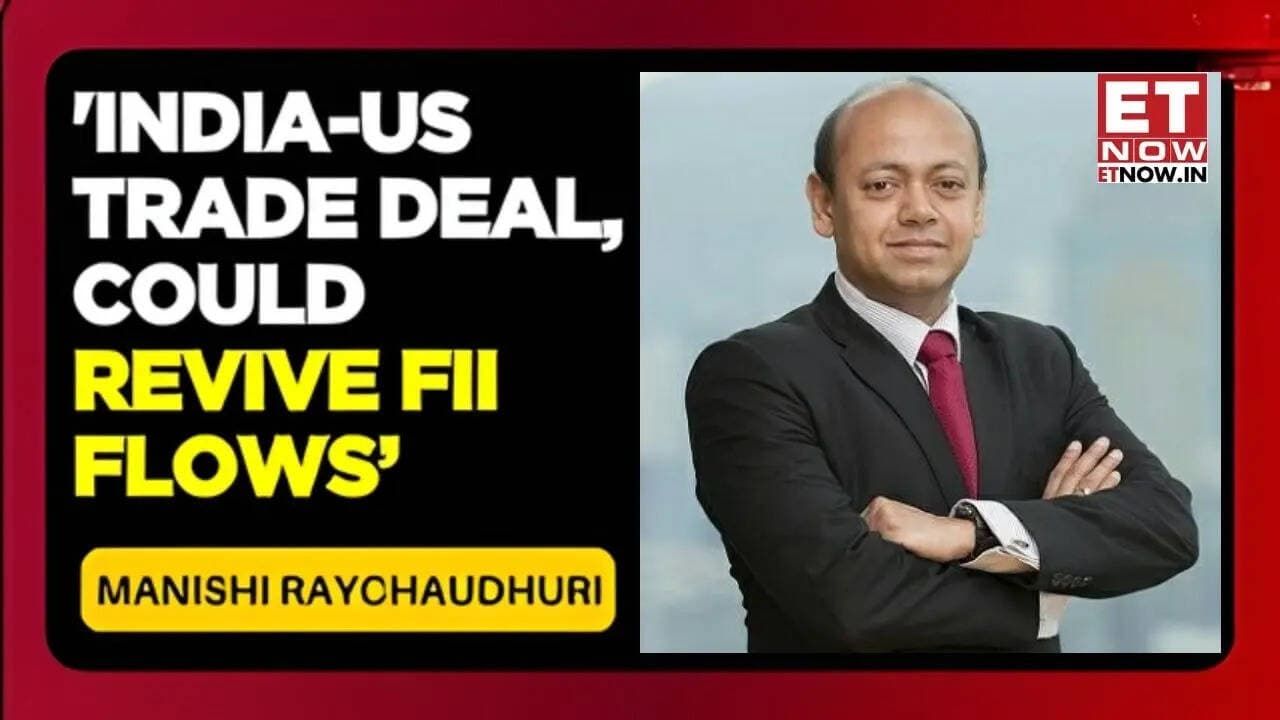

India-US trade deal and rupee boost: Manishi Raychaudhuri breaks down market impact and FII flows
Feb 4, 2026

India-US trade deal and rupee boost: Manishi Raychaudhuri breaks down market impact and FII flows

India-US trade deal: The Indian financial markets has opened on a strongly positive note today following the announcement of a significant bilateral trade agreement between India and the United States, which slashes US tariffs on Indian goods from as high as 25 per cent to 18 per cent. On Monday the deal was confirmed by US President Donald Trump and PM Modi. Veteran investor Manishi Raychaudhuri shares his take on the India-US trade deal and its market impact. From rupee appreciation and FII flows to export-orientated sectors like textiles, leather, and auto components, he explains which segments stand to benefit. Plus, he breaks down the macro factors – earnings, currency, and interest rates – shaping investor sentiment and India's long-term market outlook.He calls the decision "undoubtedly good news"."The rupee is appreciating — somewhere between 1 to 1.5 per cent — and we could see the trade deficit moderate from the recent high of around USD 42 billion in October," Manishi noted."This addresses major concerns around the balance of payments and should help stabilise the currency."Manish explained that the FII sell-off over the past 12-16 months was primarily due to two key factors – a weak earnings outlook for Indian companies and concerns about the weakening rupee. Given the potential for the trade deal to ease pressure on the currency and boost employment in export-dependent industries, he expects a resurgence in foreign investment."We still need to see earnings estimates revive for a more sustainable turnaround," he added.From an investor perspective, Manishi pointed to immediate opportunities in sectors hardest hit by the previous US tariffs of up to 50 per cent.This includes:TextilesLeather goodsSmall engineering and auto componentsAquaculture and aquatic productsJewelry"There is still room for at least two or three more rate cuts from the RBI," he added. "But the third building block — earnings estimates — is still pending. Despite the massive consumption stimulus in 2025, we are yet to see meaningful impact in consumer discretionary and other sectors." https://youtu.be/PMwr6lHvYc4?si=dqrGtwVBVAJk2BiV

Multibagger stock: RDB Infra shares rally 4% as board okays NSE debut proposal via Direct Listing
Feb 4, 2026

Multibagger stock: RDB Infra shares rally 4% as board okays NSE debut proposal via Direct Listing

RDB Infra Shares To List On NSE: Shares of RDB Infrastructure and Power are in focus today after the company announced plans to debut on the National Stock Exchange (NSE). BSE-listed RDB Infra shares opened in the green at Rs 65.38 versus the previous close of Rs 64.18 and went on to make an intraday high of Rs 66.98, up 4.36 per cent. Around noon, the counter traded firmly in the green to quote at Rs 66.20. RDB Infra shares are gaining for the last two consecutive trading sessions and moving higher than 5-day, 50-day, 100-day and 200-day moving averages but lower than 20-day moving averages.RDB Infrastructure and Power is engaged primarily in the business of real estate construction, development and other related activities. Besides, it is also engaged in the power sector.RDB Infra To List On NSEIn an exchange filing, the company said that the "Board of Directors in their meeting held on February 3, subject to fulfilment of eligibility criteria and receipt of necessary approvals, have approved the proposal to for listing of the Company’s equity shares on NSE, Direct Listing.""This proposed NSE listing represents a natural progression in Company’s growth journey and underlines management’s confidence in the Company’s business model, governance standards, and long-term growth prospects. The Company remains committed to creating sustainable value for all stakeholders while pursuing new opportunities that align with its strategic vision," the filing read.What Is Direct Listing?A direct listing is a way for a companies to list their existing shares on a stock exchange without issuing new shares or raising fresh capital. The method is usually faster and seen as a cheaper alternative to an IPO route.In the second quarter of current financial year (Q2 FY26), RDB Infrastructure and Power had reported nearly 80 per cent rise in net profit to Rs 3.05 crore. Its revenue from operations stood at Rs 18.50 crore, down more than 40 per cent on YoY basis.As per BSE analytics, the smallcap stock has delivered solid returns in the recent years. In one year, the counter has jumped 20 per cent. It has delivered a multibagger return of more than 400 per cent in two years. In three and five years, the stock has skyrocketed 1,500 per cent and 4,000 per cent, respectively.(Disclaimer: The above article is meant for informational purposes only, and should not be considered as any investment advice. ET NOW DIGITAL suggests its readers/audience to consult their financial advisors before making any money related decisions.)

RBI MPC meeting from today; Governor to announce outcome on Feb 6
Feb 4, 2026

RBI MPC meeting from today; Governor to announce outcome on Feb 6

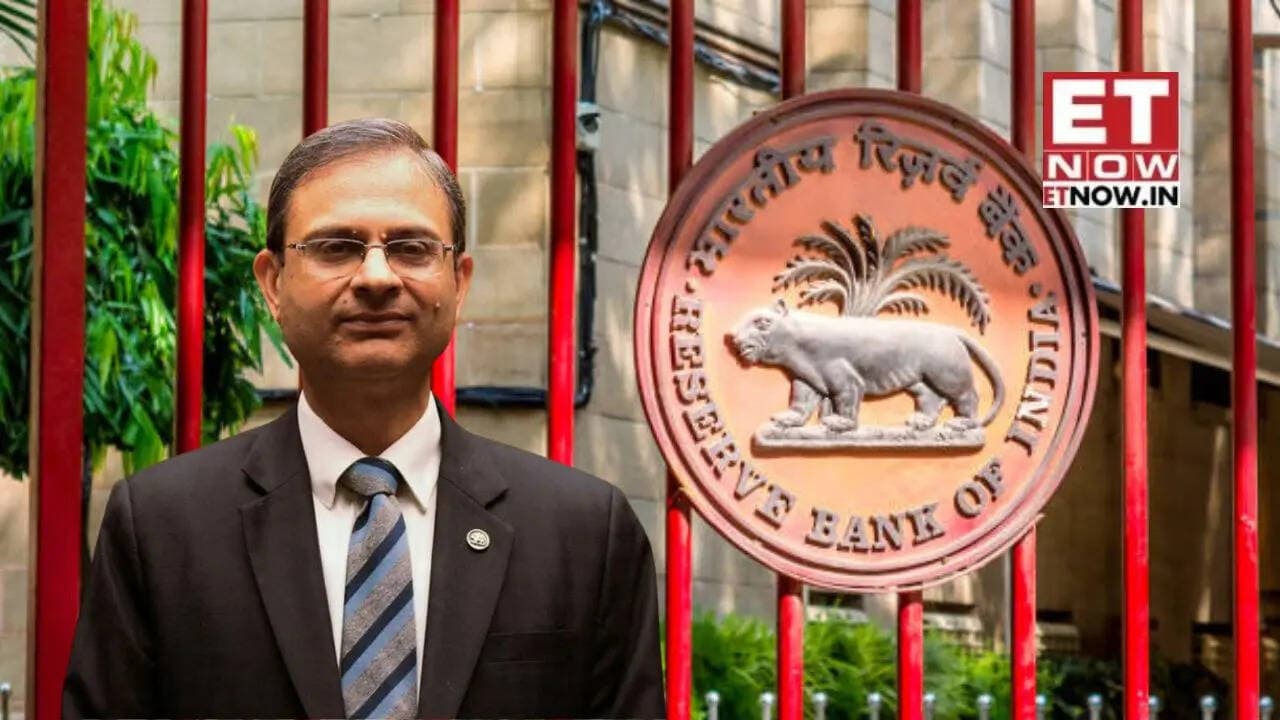
RBI MPC meeting from today: The Reserve Bank of India will hold its three-day Monetary Policy Committee (MPC) meeting from today, February 4, to Friday, February 6. The decision of RBI Governor Sanjay Malhotra lead the six-member MPC, will be announced on Friday, February 6. Economists believe the MPC is likely to pause any further cuts to the policy rate, while the central bank focuses instead on managing liquidity, keeping bond markets stable, and dealing with risks related to the currency. The RBI has already reduced the repo rate by 125 basis points since February 2025, bringing it down to 5.25 per cent. The MPC last cut rates in December 2025, but is not expected to do so again in February.RBI MPC meeting detailsThe Reserve Bank's rate-setting panel will start its three-day brainstorming for the next bi-monthly monetary policy on Wednesday, Feb 4, in the backdrop of growth-focused Union Budget, low inflation and more recently, the long-awaited India-US trade deal ending prolonged uncertainty on the external front.RBI repo rate: Experts' viewExperts are of the view that the Reserve Bank of India (RBI) has already reduced the key short-term lending rate (repo) by 125 basis points since last February, and may go for status quo on rates as there are no pressing concerns on either growth or inflation.However, some are of the opinion that the central bank may go for one more rate increase to further increase borrowing costs.The decision of RBI Governor Sanjay Malhotra-headed six-member Monetary Policy Committee (MPC) will be announced on Friday."The MPC looks likely to hold on to the repo rate, and this could also be the end of the rate-cutting cycle," Madan Sabnavis, Chief Economist of Bank of Baroda, said.The reason is that the bond yields have probably indicated that there may be no let-down now, considering that the borrowing programme of the government in net terms is the same as last year, he said, adding that given the rather tight liquidity conditions, banks cannot reduce rates across the board."Therefore, a pause looks most likely. The RBI will be looking at measures to augment liquidity, and while OMO and forex swaps will continue, there may also be consideration of lowering the CRR if needed," Sabnavis said.ICRA Chief Economist Aditi Nayar said, notwithstanding the contours of the Union Budget, rating agency ICRA believes that a pause is warranted at this juncture to assess the upcoming retail inflation (CPI) data for January 2026 and the GDP data covering FY24 to FY26.The CPI data for January 2026 is scheduled for release on February 12, using 2024 as the new base year, while the GDP data covering FY24 to FY26 is due for release on February 27, with 2022–23 as the base year."Together, these data series will help determine the prevailing growth-inflation mix and support formulating a fresh outlook," Nayar said.Crisil Chief Economist Dharmakirti Joshi said benign inflation provides the RBI with scope to consider cutting rates."The Budget, too, remains non-inflationary due to fiscal restraint. Simultaneously, the economy is also doing well. Given these factors, the decision is likely to be a close call between holding or cutting rates."However, we lean towards a hold this time and the RBI may prefer to keep powder dry for future policy actions," he said.In December, the RBI had reduced the repo rate by 25 basis points to 5.25 per cent, after leaving it unchanged in the preceding two MPC meetings.

EXCLUSIVE: India-US trade deal boosts long-term outlook, buy stocks on dips, says veteran investor Jim Rogers
Feb 4, 2026

EXCLUSIVE: India-US trade deal boosts long-term outlook, buy stocks on dips, says veteran investor Jim Rogers

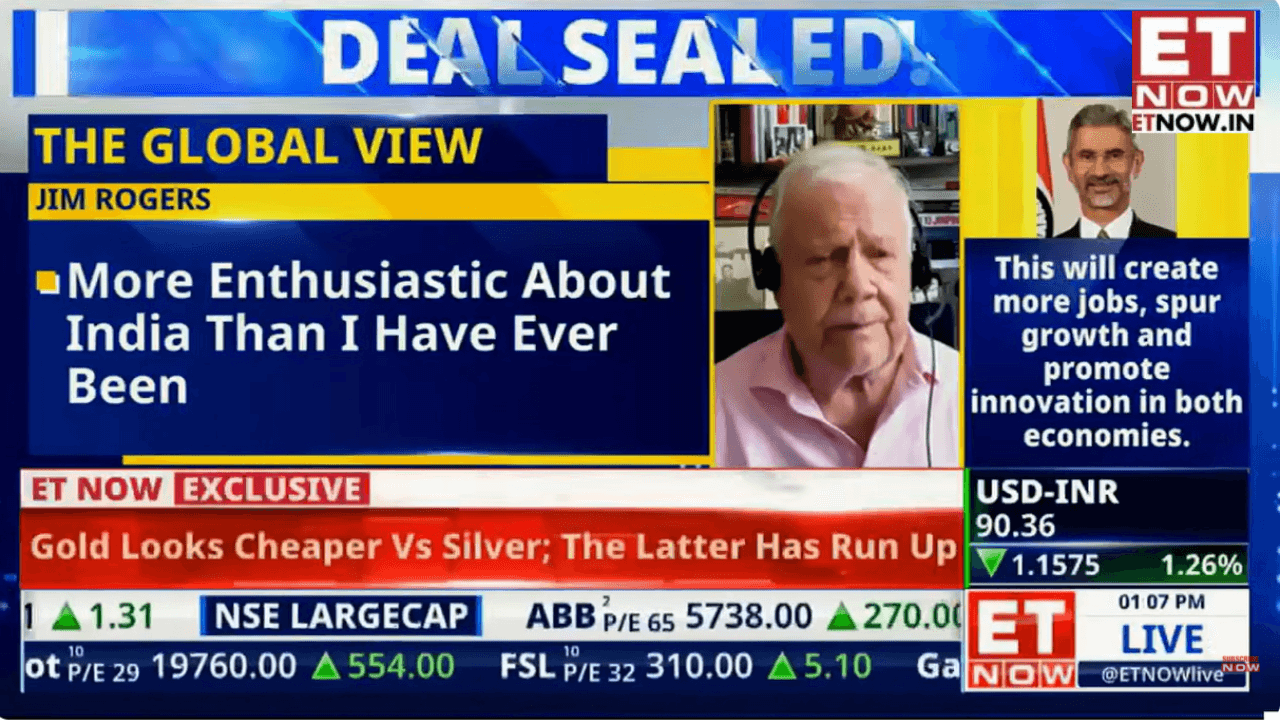
Veteran investor and bestselling author Jim Rogers has turned more optimistic on India following the announcement of the India-US trade deal, calling the country’s recent policy direction 'dramatically positive' and supportive for long-term growth. Speaking to ET Now, Rogers said his enthusiasm for India is higher than ever, even as he advised investors to stay disciplined and buy equities only during market corrections.Indian equity markets surged after news of the trade agreement, with benchmark indices hitting fresh record highs. Reacting to the rally, Rogers said India appears to be finally benefiting from smarter political and economic decision-making.“I am more enthusiastic about India than I have ever been in my life,” Rogers said. “I have always liked the country, but earlier the politicians were not very smart. Now it seems they know what they are doing. It is good for India and good for the world.”Buy Indian Stocks Only When They Get CheapWhile upbeat on India’s direction, Rogers made it clear that he does not chase markets at peak levels. With Indian equities trading near all-time highs, he prefers patience over excitement.“The Indian market recently made all-time highs. I do not own shares in India right now,” he said. “But if things go down, if they get cheap, I hope I am smart enough to buy India again.”Rogers repeated his long-standing investment philosophy of buying when assets are depressed and avoiding entries when prices are stretched.“I like to buy low and sell high. Things are not depressed in India right now. If you can tell me when they will be depressed, I will tell you when I will buy,” he added.His message to investors is simple: enthusiasm should not replace valuation discipline, even when the macro outlook looks strong.Volatility in Gold and Silver Doesn’t Change the Big PictureRogers also addressed the recent swings in precious metals, where gold and silver have corrected from recent highs. He said he does not focus on short-term price moves and instead looks at long-term structural trends.“I try to be a long-term investor. I invest when things are down and hold them for many years,” Rogers said. “Gold and silver have been going straight up, so I am not buying now, but I am not selling either.”He revealed that he already owns both metals and plans to add more only if prices cool off meaningfully.“If they go down, I hope I am smart enough to buy more. Everybody should own some gold and silver. That is something I learned in India long ago,” he noted.Gold Slightly Preferred Over Silver for NowAsked to choose between gold and silver, Rogers said gold looks relatively more attractive at present because silver has rallied sharply in recent months.“Gold is a little cheaper right now. Silver went up a lot recently, so if I had to pick one today, it would be gold,” he said, while stressing that he is not rushing to buy either at current levels.Rising Debt and Money Printing to Support MetalsLooking ahead, Rogers remains firmly bullish on precious metals due to global macro risks.“Gold and silver are going to go higher over the next few years because the world is running up huge debt and printing lots of money,” he explained. “Governments borrow, print and spend. That makes the outlook for gold and silver better and better.”According to him, the world will need massive quantities of precious metals over the next few decades as financial stress builds across economies.https://www.youtube.com/watch?v=Tf_4hZaxs6g“The world is getting in much worse shape. Please do not sell your gold and silver. If prices fall, I hope I buy more,” Rogers concluded.

With US Exit, Questions Rise Over WHO’s Global Relevance — Will India Reconsider Its Stance?
Feb 4, 2026

With US Exit, Questions Rise Over WHO’s Global Relevance — Will India Reconsider Its Stance?

America’s exit raises concerns over WHO’s financial stability and global health leadership, exposes structural weaknesses.US exit threatens WHO’s funding base, raising questions over reforms, efficiency and accountability.India as a leading force in the Global South might need to recalibrate WHO’s alignment with local public health policies and approach.Recently the U.S. Department of Health and Human Services & the U.S. Department of State announced the United States’ completion of its withdrawal from the World Health Organization (WHO) due to the organization's inability to demonstrate independence from the inappropriate political influence of WHO member states. This prompted countries worldwide to reassess how international health frameworks influence domestic public‑health decision‑making.The global health system often overlooks national contexts, struggles with flexible policymaking, and prioritizes ideology over results. This moment of recalibration provides an important opportunity for India to reflect on its longstanding tradition of publichealth selfreliance. India has historically demonstrated strong public‑health leadership when it has taken decisions rooted in local evidence. From scaling HIV/AIDS treatment with locally produced, affordable generics, to deploying digital platforms like CoWIN for one of the world’s largest vaccination drives, India succeeded in creating blueprints for health sovereignty.Tobacco control is a prime example of how global policy can be shaped by donor priorities. President Trump on January 20, 2025, announced the U.S. plan to leave the WHO. During this yearlong process, WHO stopped receiving funding from its largest donor creating an opportunity for philanthropic entities like Bloomberg Philanthropies and the Bill & Melinda Gates Foundation to step in and support specific health agendas. The concentration of influence has reignited discussions on whether global frameworks sufficiently represent the diverse needs of the Global South.India’s tobacco policy landscape reflects how these global imbalances are playing out in real time. With over 267 million users—many of whom rely on smokeless or informal products—India has one of the world’s largest and most diverse tobacco-using populations. Over the past decade, India has adopted policies on tobacco control within WHO’s framework which one can debate to be more externally aligned than local evidence based.As a part of this WHO compliance, India banned alternatives to smoking under the Prohibition of Electronic Cigarettes Act (PECA) in 2019 without any independent domestic research to assess comparative risks, and without reviewing the growing body of international scientific evidence differentiating these products. As a result, adult smokers in India have no access to regulated, scientifically evaluated alternatives—depriving them of genuine products with harmreduction benefits and restricting their freedom of choice. This vacuum also fuels illicit markets and holds back the publichealth gains.Dr. Lancelot Mark Pinto, Pulmonologist and Epidemiologist Consultant at P. D. Hinduja Hospital & Medical Research Centre stated, “Health policy needs to be data-driven, with local preferences, cost-effectiveness and social norms taken into account. Something as simple as ORS, with no pharma-lobbying or vested stakeholders possibly saved more lives than many drugs combined and is a great example of how local solutions need to be prioritized. A blanket ban deprived current smokers of safer harm reducing alternatives and was not science driven. While the loss of funds and know-how from the WHO will be missed, this is an opportunity for us to ramp up local research and have the results of the research drive policy.”Prof Dr Konstantinos Farsalinos, Cardiologist and most-cited harm reduction researcher in Greece stated, “Today we still have 1.2 billion smokers in the world and that big countries like India and Brazil are deprived of the opportunity to engage in a risk reduction strategy and deprive smokers of their right to less harmful alternatives is a serious issue. It has nothing to do with science, because science is quite clear. And that raises a lot of ethical questions about why smokers are not given what they need and what they deserve.”As the broader international environment evolves, India has an opportunity to reaffirm a model of health sovereignty that is shaped by scientific evaluation, populationspecific local realities, and the right of adults to access less harmful choices. Strengthening domestic research, modernising regulation, and enabling structured stakeholder engagement will be key to building a publichealth pathway that reflects India’s needs.(No Times Now Journalists are involved in creation of this article.)

Advertisement
Banner Ad Space Available
728 x 90px (Leaderboard)